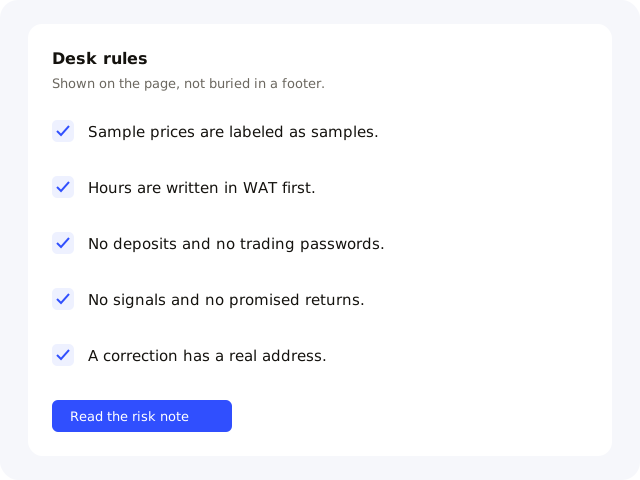
Hefi is a small editorial desk publishing forex guides for readers in Nigeria. The pages are written in English and served at the root of this site, with no /en/ duplicate. We are not a broker, we do not introduce you to one for a fee, and we do not hold client money. If that ever changes, the about page changes in the same afternoon, in plain sentences, not in a footer patch.
How a page gets written
We start from the question a reader actually has: which of the two prices is mine, why the naira spread is rude, what time London is in Lagos this month, how big the lot is once the loss is named. Then we draw an interface, because a paragraph about a ticket is weaker than a picture of a ticket with the numbers filled in. The numbers are frozen and labeled. A moving price would pretend we run a dealing desk.
We use West Africa Time throughout. Where London or New York matters, we convert it, and we say which season the conversion belongs to. A timeless "New York opens at 1pm" is how guides go stale in November.
What we will not do
- We will not tell you what to buy or sell, today or on a payroll Friday.
- We will not rank firms, sell a bonus code, or ask for a deposit.
- We will not request a trading password, an ID card, or remote access to your computer. Anyone who does that in our name is lying.
- We will not dress a sample quote up as a live feed.
Corrections
A wrong pip definition is a real error, not a difference of style. Write via the contact page with the URL and the sentence. We would rather amend the date at the top of a guide than leave a tidy mistake in place because it has been indexed.
The risk of the activity you may be studying is set out, without a soft landing, in the risk disclosure.
Why the sentences sound like this
Broker pages tend to praise speed, leverage, and the number of symbols. Those are real features of some platforms and poor teachers. A reader who has been pitched all week does not need another pitch with the logos filed off. The tone here is closer to a desk note: dated, specific, and willing to say no trade. We would rather be slightly dry than slightly magical. If a sentence starts to glow, it is probably wrong, and it should be cut before it is indexed.
We also refuse a fake biography. There is no portrait of a trader who does not exist, and no tally of clients we do not have. The byline is the desk because the desk is what there is. Corrections are public in the sense that the page changes and the date changes. We do not run a comments pit under the guides. Argument belongs in the mail, where a sentence can be checked instead of performed.
Why the examples are Nigerian on purpose
A generic forex lesson converts everything into dollars and calls the clock GMT. That is tidy and it is how a reader in Abuja mis-times New York by an hour for half the year. The naira examples are not a claim that USDNGN is a good market for beginners. Often it is a harsh one. They are a claim that the harshness should be visible in the first week, in the currency the reader already uses for rent, instead of appearing later as a surprise. When a figure has to pass through dollars, we say so, and we mark the rate as illustrative.
English is the language of the pages, at the root address, with no /en/ twin. If a second language ever arrives it will be a real translation with its own URL, not a folder of the same article. Until then the hreflang tags point here, because here is the only copy.