Forex, for a beginner, is usually three things arriving at once: a word, an app, and a person who already has a chart. They are not the same thing. The word means a market in the price between currencies. The app is one firm's window onto a quote. The person is a cousin, a video, or a group chat, and they have a mood. This page separates them. The rest of the site assumes you can tell a quote from a story.
You are not learning how to collect foreign notes, and you are not learning how to beat the rate your bank offers on a transfer. You are learning how a ticket is priced, what it costs to be wrong, and which question belongs on a later page. If that sounds smaller than the video that sent you here, it is. The smaller version is the one that is still true on a Tuesday.
Three objects, and then you can stop for the day
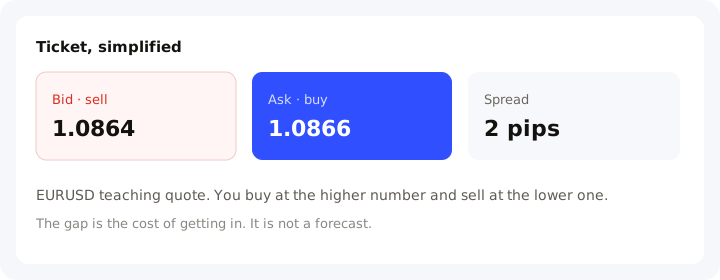
A pair, two prices, and a size. A pair is two currencies written as one symbol. EURUSD means the euro priced in dollars. USDNGN means the dollar priced in naira. The teaching EURUSD ticket on this site is frozen at a bid of 1.0864 and an ask of 1.0866. The teaching USDNGN ticket is frozen at 1,648.20 and 1,653.40. Neither number will update, and neither one is a suggestion.
The two prices are the part beginners skip because a chart looks like one line. It is not one line. The lower number is the bid, where you sell. The higher number is the ask, where you buy. The gap between them is the spread, and you pay it on the way in, before the chart has done anything you would call a move. On the euro ticket that gap is two pips. On the naira ticket it is 5.20 naira. You do not need to trade either pair today. You do need to see that they are not the same lesson wearing different letters.
Size is the third object, and it is the one the app will fill in for you if you let it. A lot is a unit, not a feeling. On many major pairs, 1.00 in the volume box is 100,000 of the base currency. Leaving the default there because the account looks small is how a first trade becomes a large one. The size guide does the arithmetic in naira. Until you have worked that sum on paper, the honest volume is a demo's smallest step, or no trade at all.

Buy at the higher number. Sell at the lower one. If you cannot point at those two prices on a ticket that is not this website, you are not ready for a strategy. You are ready for the pair page, which stays with the digits longer than this one will.
What a beginner in Nigeria keeps mixing up
Four naira numbers can land before lunch. A bank app shows one. A transfer receipt shows another. The Central Bank's own page shows a policy fact with its own definition. A platform shows a bid and an ask that match none of them exactly. They are allowed to disagree. Each one answers a different question, and the argument starts when someone averages them into a "real" dollar and then blames the chart for missing it. Write the source beside the number. If you cannot name the source in a few words, you do not yet have a rate you can cite, and you certainly do not have one you can trade.
The clock is the other mix-up. Nigeria stays on West Africa Time all year. London and New York move their clocks, and they do not move them on the same Sunday. A beginner who copies "New York opens at 1pm" from a July video will be wrong for part of the year and will not know which part. The session guide dates the hours for October 2026 and for the winter after. You do not need that page until you are choosing an hour. You do need to distrust an hour that has no month written next to it.
Leverage is the mix-up that arrives dressed as a feature. A badge that says 1:500 is a ceiling the firm is willing to offer, not a wage and not a sign that your small account has become a large one. It changes how fast a loss arrives relative to the money you put in. It does not change the value of a pip, and it does not shrink the spread. Leave it alone until the size page has made the loss boring.
A first week that is allowed to be dull
Day one is this page, and then you stop. You are done when you can say, without looking up, that you buy at the ask and sell at the bid, and that this desk does not want a deposit. Day two is how a pair works, with the teaching ticket, until pip and lot are ordinary words. Day three is the naira guide if that is the chart you actually open. If it is not, skip it. A euro lesson does not become more advanced because you forced yourself through a wide pair you do not trade.
Day four is the clock, and only if you have been awake in a quiet hour and calling the result a strategy problem. Day five is the size sum on paper, with a pip cost you copied from a platform's specification rather than from memory. Do not open a live volume box in order to feel the lesson land. The glossary is for the single word that snagged. It is faster than rereading a whole guide out of politeness.
You are allowed to finish in an evening if you already knew the two prices. Collecting five days is not the achievement. The achievement is four notebook lines: the symbol, both prices, the hour with the month, and a loss in naira you have not yet been asked to risk. When a chat message disagrees with those four lines, believe the lines. The chat does not know your spread.
What to ignore until the ticket is dull
Ignore signals. A level forwarded from a group is a sentence that does not know your costs, your size, or your rent. Ignore gold, indices, and the Dow row on the homepage until one currency pair is boring. Those symbols are on the teaching card so the layout looks like a watchlist a person might keep. They are not a starter set. Ignore any page that names a price for next Thursday. We do not have a forecast, and a beginner does not need someone else's.
Ignore bonuses for funding an account, broker rankings on a site that also opens accounts, and a file in a chat that claims to be the real platform. Hefi will not name a preferred firm and will not ask you to install anything. The screen tour is there when a button is in the way. Until then a drawing is enough, because this site has no login. There is nothing to log into.
Also ignore the urge to make the first week feel busy. A demo with a huge balance will let you rehearse a lot you could not fund, and the green number will feel like skill. It is a label. If you open a demo at all, type a naira budget you actually have into the size page first, so the lot you click is a lot you could survive. Many beginners never need the demo in week one. Reading the two prices out loud is the practice.
Mistakes that show up in the first month
The first is trading inside the spread. On the teaching USDNGN ticket the gap is 5.20 naira. A target of one or two naira feels cautious and is already smaller than the toll. The idea sounded small. The ticket experienced it as a fee. Look at the spread before you admire the candle. If the move you need is not clearly larger than the gap, there is no trade, and the chart can still be interesting for free.
The second is choosing the lot from the maximum the button allows, then hunting for a stop that makes the arithmetic smile. A stop belongs where the idea is wrong. The lot is whatever falls out after you name the loss and round down. Reversing that order is how a modest account meets a loss that does not feel modest. The worked example on the size page, NGN 500,000 and 1 percent, is a chalkboard. Change the balance. Do not change the order of the steps.
The third is editing the trade after it goes against you. Moving the stop further away without cutting the size is a new, larger risk wearing the old trade's name. Adding to a loser so the average price looks kinder is the same habit with more clicks. A beginner is allowed to be wrong. A beginner is not required to sponsor the wrongness. Close it, write the naira result in one sentence, and leave the platform until the next idea has its own four lines.
The fourth is asking this desk what to buy. The answer stays no, including when the chart is described vividly and the rent is mentioned. A guide can show the machinery. It cannot know whether you can sit through a losing week. That limit is the risk disclosure, and it applies on the first day as much as on the hundredth.
When this page is finished
Leave when the three objects are dull and the list of things to ignore is shorter than the list of videos you saved. The next page is how a pair works, unless the only chart in front of you is the naira, in which case go there and let the spread be the lesson. If a single word is the obstacle, use the glossary and come back only if the word was load-bearing.
If the week felt productive and your hand is near a deposit form, stop for the night. Productive and ready are different. Ready, on this site, means you can point at the ask, name a loss in naira, and say which page you still have not read. It does not mean a certificate, a signal, or an account with us. We do not have accounts.