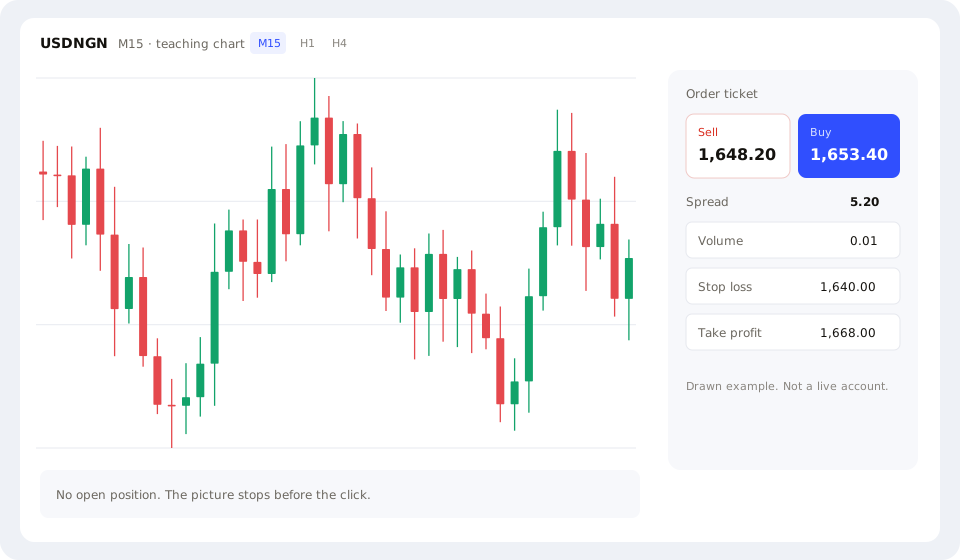
The first time you open a trading platform it looks as if every panel is asking for a decision. Most of them are not. There is a chart, which is a history of the quote, and there is a ticket, which is the only place a decision becomes a position. Everything else is a preference about how the history is drawn.
The same job, several windows
MetaTrader 4, MetaTrader 5, a broker's own phone app, and a web terminal are different pieces of software doing a narrow job: show a bid and an ask, accept a size, and report the result. MT5 can show more markets and a couple of extra order types. MT4 is older and still everywhere. Neither one is a strategy. A web terminal is useful when you will not install a file. A phone is useful when you are away from the desk, and it is a bad place to do your first size calculation, because the specification panel is usually buried.
Install from a store page you navigated to yourself, or from the firm whose name is on the account agreement. A setup file that arrived in a chat, even with a logo you recognise, is a reason to stop. The guide you want is not inside that file.
A tour of the ticket
Find these and ignore the rest until they are boring.
- Symbol. The pair, written small. USDNGN and EURUSD are not neighbours that forgive a mis-tap.
- Bid and ask. Two numbers, updated. If you only see one, you are on a marketing page, not a ticket.
- Volume. The lot. This is the output of the size sum, not a default you leave at 1.00 because the box was already filled.
- Stop loss and take profit. Optional on some tickets, and dangerous to treat as optional in your process. A stop belongs to the idea. Put it on when you enter, not after the candle has already gone the wrong way.
- Market against pending. A market order deals at the current ask or bid, plus slippage if the price moves while the order travels. A pending order waits for a price you name. Neither one knows the future.

One-click trading removes the confirmation. Turn it off until you have placed ten boring demo trades without surprise. Speed is not the scarce skill. Reading the volume box is.
What a demo flatters
A demo balance is play money, and the fills are often smoother than the live book you will meet later, especially on a thin pair. There is no withdrawal to fail, and there is no feeling in the hands. Use the demo to learn where the specification lives: the pip size, the margin requirement, the swap, the trading hours. Place the teaching size from the calculator and see whether the platform's own estimated loss matches your paper sum. If it does not, believe the platform's specification and redo the paper.
Do not rehearse revenge on a demo. The point of the exercise is a dull match between the number you intended and the number the ticket accepted.
How to look at a firm without a slogan
Hefi does not rank brokers and will not start taking fees to do so. If you are choosing a place to send money, these are the questions that survive a glossy homepage.
- Which company holds the account, in which country, and which regulator actually lists that company? A logo is not a register.
- What is the spread on the pair you will trade, at the hour you will trade it? The spread in the advert is often a different pair at a different hour.
- Can you withdraw a small test amount back to a bank account in your own name, and how many days did it take?
- Does the client agreement say what happens if the balance would go below zero?
- Does support answer a boring question about swap time in WAT, or only a question about a bonus?
If the answers are fuzzy, that is an answer. The risk disclosure on this site is about the market. It is not a review of any firm, and it is not permission to skip the agreement they sent you.
What we will not ask you for
No Hefi page needs your trading password, a deposit, a copy of an ID, or a remote-access app. Anyone asking for those in our name is not us. The only address for a correction is the contact page, and it opens a mail draft. It does not log you into anything.
The specification panel, which is the grown-up page
Somewhere behind the chart, every serious platform keeps a specification for the symbol. It is often a small icon, a right-click, or a buried menu, and it is more important than the colour of the candles. That panel should tell you the digits, the contract size, the margin rate, the swap, and the sessions the firm itself observes. Copy the pip cost from there into the size calculator. If the panel and our teaching example disagree, the panel wins, because the panel is the firm that will settle you. Our 160 naira figure is a chalkboard number. It exists so the arithmetic has a visible input, not so your account has to obey it.
While you are in that panel, read the trading hours in the firm's server time and convert them once into WAT. A symbol that looks tradable on a Sunday evening may be quoted and not really dealable, or dealable at a spread that would embarrass the weekday advert. The chart will still draw. Drawing is not the same as a book that will fill you near the price you see.
Timeframes are a preference, not a rank
M15, H1, and H4 are ways of bundling the same quotes. A higher timeframe hides noise and also hides the spread, because the candle is tall and the toll is a thin line at the edge. A lower timeframe makes the spread look enormous, which on USDNGN is often the honest view. Neither one is more professional. Pick the timeframe that matches how long you said you would hold the trade, then check that the spread is still smaller than the move you need. If you need three timeframes before the idea makes sense, you may be shopping for a picture that agrees with you.
Indicators sit on top of that choice. They summarise old quotes. They do not pay the spread and they do not know the naira amount of your stop. Use them after the ticket is understood, or not at all. A clean chart with a written loss is a fuller plan than a crowded chart with a default lot.
Phone for looking, desk for the first ten tickets
A phone is the right tool once the click is boring. It is the wrong tool for the first specification check, because the panel is small and the confirmation is easy to skip. Do the size sum at a desk, place the demo trades at a desk, and turn one-click off until you have matched paper to the estimated loss ten times without a surprise. Then the phone can carry a position you already understand. If the only reason to use the phone is that a chat is urging speed, stay at the desk. Speed is available later. Reading the volume box is the scarce skill, and it is easier in a chair.
What a normal install looks like, and what it does not
A platform you already decided to study is downloaded from the firm whose name is on the account, or opened in the browser they gave you. The icon in a chat, the "fixed" build a stranger hosts, and the remote-access app that offers to click for you are a different category. We will not name a preferred installer and we will not rank the firms. The test is dull and sufficient: you can see a bid and an ask, you can find the specification, and you can read the volume before you confirm. If any of those three is missing, the window is not ready to be a classroom, however familiar the logo is.
Demo and live should be visibly different, and you should be able to say which one you are in without squinting. A demo balance with many zeros will let you rehearse a lot size your live account cannot carry. That rehearsal teaches the buttons and lies about the risk. Type the live balance into the size page even while you are still on demo, so the lot you practise is the lot you could actually fund. When the estimated loss on the ticket matches the naira figure you wrote down, you have used the software for the only job this guide cares about.
Then close the extra panels. Depth, news, and a second chart can wait until the ticket is boring. A screen full of tools is not a sign that the trade is researched. It is often a sign that the volume box was never read. The size guide is still the page that turns a stop into a lot. This page only insists that the lot you calculated is the lot the platform is about to send.